Metal Machining
——
Copper CNC Machining Service
Copper CNC Machining Service
Top Aluminum CNC Machining Parts Manufacturer and Supplier in China
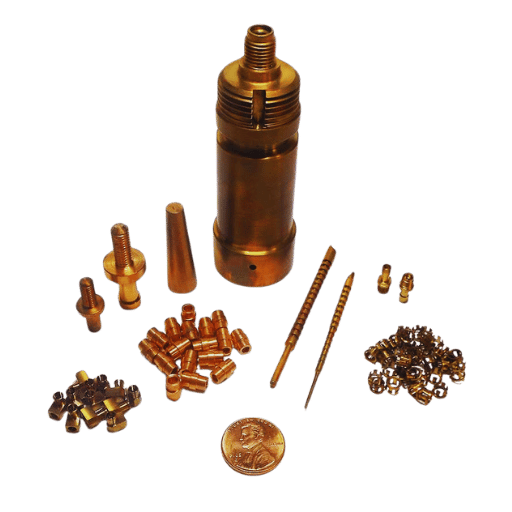
Achieve maximum accuracy and efficiency with our Copper CNC Machining Service that caters to the electronics, automotive, aerospace, construction industries, among others. Be it a sophisticated prototype or mass-scale production, our advanced machinery guarantees exceptional outcomes with unrivalled precision and productivity.

SPECIALIZED FACTORY

ECONOMICAL PRICING OPTIONS

ON-TIME DELIVERY

PERFECT CUSTOMER SERVICE

Copper CNC Machining Service for Custom Copper Parts

Premier Copper CNC Machining Service: For distinct industries, precise copper parts are manufactured.
What is Copper CNC Machining?: Copper is shaped by a CNC while keeping its intricate designs and conductivity.
Importance of Copper Machined Parts: For increased durability, copper is conductive, and corrosion resistant for enhanced functionality.
Applications Across Industries: Copper parts are needed in the automotive, aerospace and electrical sectors.
Why Choose Us: Our technology is bespoke and achieves unparalleled precision which ensures superior copper products.
Advantages of Copper CNC Machining Service
xplore the benefits of copper CNC machining services which offer high precision and durability along with unmatched performance tailored to your production requirements.
Precision Manufacturing Capabilities
Meet remarkable scale repeatability through 3-axis and 5-axis CNC copper milling, achieving astonishing accuracy with tight tolerances for complex copper components.
High-Quality Copper Materials
Besides being anodized for complete protection, Aluminum naturally resists oxidization which works towards its advantage

Fast Turnaround Times
Streamlined processes combined with extensive machine capacity enable us to meet stringent production deadlines regardless of project complexity or scale.
Customizable Options
Thanks to Aluminum’s low density, durability is not compromised while weight reduction is achieved, which is important in the industry.
What Are the Surface Finishing Options for Copper Parts?
How Does CNC Machining Work with Copper?

Polishing and Texturing: Processes such as polishing, buffing, and grinding enhance looks and functionality—even make a surface smooth and reflective, or textured.
Protective Coatings: Plating (such as with nickel or tin) and chemical processes such as patinas or oxidation improves the surface appearance, corrosion resistance, and conductivity of the material.
Surface Preparation: Cleansing, passivation, and anodizing are methods that enhance the durability of copper parts by preventing corrosion and oxidation, which increases their lifespan..
Texturing Methods: Sandblasting and tumbling offer erasure of imperfections while providing uniform texture to the surface to be treated further.
Precision Techniques: Computer Numerically Controlled (CNC) machining of copper employs computer-controlled tools such as mills for complex geometric shapes and lathes for cylindrical pieces with tremendous accuracy.
Choosing the Right Materials: The material used must be highly conductive and easy to work with. Therefore, pure copper as well as C101 and C110 alloys are appropriate choices.
Obstacles: Difficulties include deformation and tool wear caused by copper's softness, along with the need to manage excessive heat due to the material’s high thermal conductivity.
Uses: CNC machining of copper is crucial to electrical parts, heat exchangers, and other fields that require great amounts of thermal and electrical conductivity.
why choose our Copper CNC Machining Service
Specialized Copper Machining: Profound familiarity with pure copper and its alloys concerning intricate shaped designs.
Innovative Equipment: State of the art CNC and wire Electrical Discharge Machining (EDM) ensures high-quality work.
Specific Solutions By Industry: Special processes for electronics, aerospaces, medical industry, etc.
Rapid Response: Guaranteed production and delivery within stringent deadlines.
Support & Sustainability: Green mandates and devoted customer service in all phases assist.

What Our Client Says
Client trust is not built in a day. We take pride having served satisfied clients from the automotive, aerospace, electronics, and consumer goods sectors. Here is what some of them say:
The quality and lead time precision were bang on. The copper parts integrated seamlessly into our EV charging systems and customer service made sure that every requirement was fulfilled.

Sarah T
Engineer from Automotive Industry
We thought no one would be able to assist us with such a complex design, but this service exceeded our expectation. They maintained deadlines and tolerances, which was remarkable.

Kevin R
Aerospace Supplier
Expert Guides to Copper CNC Machining

Does Copper Have Good Machinability?
Machinability of copper poses some complications: pure copper poses challenges to machinability due to its ductility and malleability, but alloyed copper offers good machinability.
What Is The Best Copper For Machining?
The best option for machining is Copper 110 which is also known as Electrolytic Tough Pitch (ETP) copper. Copper 110 is known for its excellent machinability, high electrical conductivity, and superior thermal conductivity – properties vital to a broad spectrum of applications. This high-quality copper is ideal for use in electrical components, industrial parts, or even custom pieces as it ensures reliability and precision.
What Materials Cannot Be Cnc Machined?
CNC machining is not suitable for all materials. Glass and ceramics which are brittle, foam and rubber which are soft, highly flammable materials, heat-sensitive plastics, and materials with irregular shapes or complex contours are not typically able to be machined using a CNC. Remember to select the materials appropriately for best precision, efficiency, and safety if you are considering CNC machining.
What Is The Best Copper For Machining?
The best type of copper for machining purposes is Copper 110, or Electrolytic Tough Pitch (ETP) copper, because of its properties such as excellent machinability, high electrical and thermal conductivity, and usefulness for a variety of applications.
What Materials Cannot Be Cnc Machined?
Manual CNC machining cannot be performed on materials that are: brittle such as glass and ceramics, soft like foam and rubber, highly flammable, sensitive to heat, or those with irregular shapes.
What Are The Four Types Of Copper?
Plumbing uses four primary copper pipe types: Type K, Type L, Type M, and DWV. They each have a designated use like water supply, HVAC or drainage. Knowing the distinctions of these different types of copper pipes will assist you in selecting the perfect one for your plumbing or construction project.
Frequently Ask Questions
Q: What is CNC machined copper and why is it a popular choice for machining projects?
A: CNC machined copper is the term given to the use of CNC machines to fabricate custom parts from copper materials. It is a popular choice because of its outstanding thermal and electric conductivity, resistance to corrosion, and ductility which makes it useful in a wide range of applications including those to do with electricity.
Q: What are the benefits of using copper c101 and copper c110 in CNC copper machining?
A: The two types of copper alloys that are most often used in CNC copper machining, due to their exceptional thermal and electrical conductivity, are copper c101 or oxygen-free copper and copper c110 or electrolytic tough pitch. In addition, C101 and C110 offer high corrosion resistance while also being more easily machined which allows them to be used for parts with tight tolerances.
Q: How does CNC copper milling differ from traditional machining methods?
A: CNC Copper Milling employs computer-controlled machine tools to remove material from a copper workpiece, creating intricate geometries and high tolerances. This form of copper milling is more sophisticated and productive than the older methods that rely on hand tools, which are less accurate.
Q: What kinds of copper CNC machined parts can be fabricated?
A: CNC parts can include custom devices such as electrical components, heat exchangers, plumbing, and industrial machinery fittings copper. Copper is capable of producing parts that work well in harsh conditions due to its exceptional thermal and electrical properties resourced from environment.
Q: What are the benefits of applying copper alloys in CNC parts machining?
A: Industrial standards require the materials to have high resistance therefore copper alloys are one of the best options as they have great oxidization and thermal conduction coupled with great machinability. These benefits make copper alloys well accepted to manufacture CNC parts used in metal and plastic composites which are trusted to withstand high stress.
Q: How does the high corrosion resistance of copper help out in projects involving CNC machining?
A: The strength of copper’s corrosion resistance ensures CNC parts stay useful and intact in rough conditions for long period of times. Copper is very useful for parts that meet water or other harmful ingredients because these make highly dangerous elements.
Q: Is it possible to achieve tight tolerances using CNC copper machining for accurate applications?
A: Yes. The precision technology and pneumatically actuated tools of CNC copper machining are capable of achieving precise tolerances as required for accurate applications. CNC equipment has high standards of precision and repeatability because the cutting tools are controlled by computer programs, and the parts are produced mechanically.
Q: What advantages does copper offer in terms of ease of machining compared to other metals?
A: Copper’s easy machinability rating comes from its ductility as well as to its thermal conductivity. Because the cutting action requires less energy, the tools last longer, and the machining cycles are quicker, which springs productivity, copper is easier to work with than most metals.
Q: May I have an explanation on how to submit a request for CNC copper machining services quote?
A: For a quote on CNC copper machining services, reach out directly to the service providers through their customer support or service webpages. Have relevant details on file such as the project specifications, type of material, measurements, and other specifics for the custom parts needed.
Top

DuoXinDa
Precision Manufacture
Tel: 86 137-1189 0566 Eva
E-mail: eva.jiang@dxdprecision.com
© 2025 Dongguan Junlian Technology Co., Ltd. All Rights Reserved.
© 2026 DuoXinDa Precision Manufacture. All Rights Reserved.
