Metal Machining
——
Aluminum CNC Machining Service
Aluminum CNC Machining Service
Top Aluminum CNC Machining Parts Manufacturer and Supplier in China
Our Aluminum CNC Machining Service lets you get high-grade custom aluminum parts fabricated to suit your requirements. Using sophisticated CNC technology, we have mastered the creation of components unparalleled in precision, repeatability, and efficiency. Our service guarantees exceptional outcomes, remarkable prototyping, and full-scale production speed alongside unmatched customization.


SPECIALIZED FACTORY

ECONOMICAL PRICING OPTIONS

ON-TIME DELIVERY

PERFECT CUSTOMER SERVICE
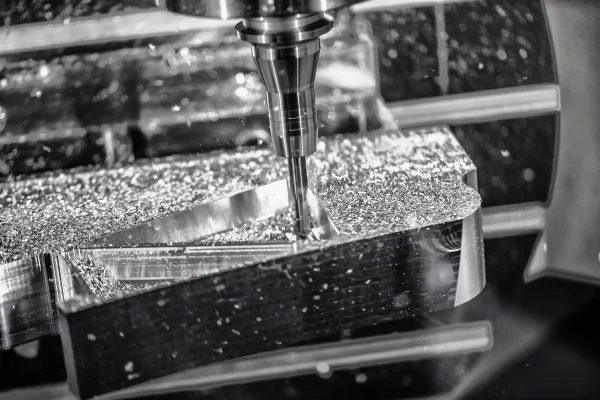
Precision Aluminum machining services: Your One-Stop Online Solution

Tolerances: Application Depends - Precise Applications Up to ±0.05mm.
Minimum achievable wall thickness is 0.75mm.
Maximum size of a part is 200 x 80 x 100 cm. This value accommodates components of varying size
Lead time for prototypes is within 3-5 days while larger machining production runs is 10-15 days.
Process capabilities include 3-axis and 5-axis CNC milling, CNC turning, and Swiss turning.
Advantages of Aluminum for CNC Machining
Aluminum CNC machining of high precision for custom parts. Solutions of superior quality for aerospace, automotive, and more. Unrivaled
expertise and technology are at your fingertips.
Has Exceptional Machinability
Compared to other metals, Aluminum is cut faster, streamlining its manufacturing processes.
Corrosion Resistant
Besides being anodized for complete protection, Aluminum naturally resists oxidization which works towards its advantage
Finishing Versatility
Different finishes can be applied to Aluminum making it aesthetically appealing while improving performance.

Offers Reliability and Toughness
The many Aluminum alloys available offer great strength-to-weight ratios, making them suitable for demanding applications.
Lightweight
Thanks to Aluminum’s low density, durability is not compromised while weight reduction is achieved, which is important in the industry.
Cost-Efficient
Machining Aluminum is cost-efficient, as lower production costs are incurred compared to other metals.
Tolerances and Precision Levels for Our Aluminum CNC Machining
What Are the Costs Associated with Aluminum CNC Machining

Tolerances Achieved: CNC Tolerance for Aluminum can vary from ±0.005 inches (0.13 mm), but some feature can reach tight tolerances of ±0.001 inches (0.025 mm) or even ±0.0005 inches (0.0127 mm)
Factors Affecting Precision: Achievable tolerances accuracy is affected by material properties, part size and complexity, surface finish, and environment conditions.
Balancing Precision and Cost: Adjusting and narrowing tolerances increases costs and machining time; we strive to provide our customers with the best case scenario that range within their budget.
Quality Assurance: Consistency as well precision is achieved with advanced CNC machines and rigorous quality control during all processes pre- and post-production.
Cost Factors: Aluminum CNC machining pricing is influenced by material choice (e.g. 6061 vs. 7075 alloys), machine type (3 -axis vs. 5-axis), labor, volume of production, and the intricacy of the design. Tooling costs, and even tool wear, impact post processing costs.
Material and Design Choices: Apply more affordable 6061-T6 alloy and reduce design complexity to aid in minimizing machining time, tooling time, and post-processing time.
Production Volume: Using lower unit costs for larger batch sizes due to economies of scale, coupled with bulk ordering and blanket orders, optimize costs.
Cost Saving System: Achieving favorable outcomes can be obtained with design for manufacturability (DFM), automating the processes, surface treatments, and working with knowledgeable CNC operators.
why choose our Aluminum CNC Machining Service
Advanced Technology: Our latest equipment, such as our 5-axis CNC machines, ensures the highest level of precision on even the most complex parts.
Experienced Team: Our engineers and machinists have decades of experience which gives us an edge in flawlessly executing even the most complex and demanding projects.
Comprehensive Customization: From alloy selection to surface finishing, we offer tailored solutions that meet your needs and demands.
Competitive Pricing: Cost-effective material and resource procurement enables us to reduce expenses without jeopardizing processes and quality.
Global Delivery: We can serve clients worldwide and ensure prompt shipment to meet your deadlines.

What Our Client Says
Understand from our clients what they say about doing business with us and the unique value addition we provide.
Exceptional quality and customer service! The aluminum components we received were accurately machined to our specifications. The entire team was attentive and supportive during the entire process.

John
Aerospace Engineer
As a small business owner, their pricing structure and the ability to receive quotes instantly is commendable. It allows for much easier budgeting for projects. The parts are delivered precisely as specified, always right on schedule.

Mike
Product Developer
Expert Guides to aluminum custom CNC machining

Can a CNC machine cut aluminum?
That is correct; a CNC machine is capable of cutting aluminum. It is a widely machined metal used in the manufacturing of various products such as nameplates, intricate parts, and even aviation components.
What is the feed rate for aluminum CNC?
For a 1/4” bit, it’s recommended to have a feed rate of 125 inches per minute (IPM) although more conservative approaches would be around 20-25 IPM.
Another suggestion is to begin with a feed of 10 IPM at 1500 RPM, then make changes depending on the size of the cut.
What is the best aluminium for CNC machining?
Aluminum 6061: One of the most widely used alloys for CNC machining is 6061 aluminum for its versatility . It has satisfactory strength, is somewhat corrosion resistant, and is easy to machine, which makes it capable for general uses such as in aerospace, automotive, and electronics industries.
Aluminum 7075: Used for aerospace and military parts because of its high strength and superior corrosion resistance, this alloy has its downsides, too. 7075 is both more expensive and less malleable than other choices, making it less advantageous for some projects.
Aluminum 2024: Used by the aerospace industry because of its light weight, this alloy is very easy to machine and highly durable. Its fatigue resistance is exceptional, but its corrosion resistance is worse than other alloys.
Aluminum MIC 6: This alloy is created specifically for use in high tolerance and thermally stable plates, which means that precision and thermal stability is required.
Aluminum 6082: This alloy is frequently used in construction and structural works because it has high tensile strength and is corrosion resistant.
Can you CNC aluminum without coolant?
Sure, it is possible to CNC machine aluminum without a coolant, but the following things should be thought out carefully:
Misted Oil: Many machinists utilize compressed air to blow viscid and to get rid of chips as well as heat. Additionally, some use a mist sytem which works at low lubrication to avoid chip welding and increase surface quality.
Tools and Parameters: For some aerospace work, specific tools such as high-helix endmills need to be mounted and set to the optimal feedrates, speeds, and even depth of cut. This helps limit heat concentration and chip welding.
Coolants: It doesn’t have to be coolant safe, but smaller quantities of cutting oil for example, WD40 or self-tapping aluminum oil, do increase performance and lower tool erosion.
Obstacles: Without the coolant, chip clearance is very important. Anything after that greatly compromises the thermal expansion and surface finish of the tool.
How fast should you cut aluminum?
The alloy of aluminum along with the tool material and the specimen machining procedure determine the most efficient speed for cutting aluminum. Here are some insights to consider:
Cutting Speed (Surface Feet per Minute – SFM):
The typical range of cutting speeds is from 250 to 600 SFM when using high-speed steel (HSS) tools.
With carbide tools, speeds can reach 2,820 SFM for wrought aluminum alloys such as 6061-T613.
With Saw Tooth Cutter head Tungsten Carbide tools teeth, the Estimated range will exceed 8,000 SFM.
Spindle Speed (RPM):
Apply the C formula: RPM = (Cutting Speed x 12)/(π * Tool Diameter) .
As an example, for a tool of 0.5 diameter with 500 SFM is stated to have an RPM of 3820.
For smaller pieces shoved into the cutter, the typical range for feed rate is 8 IPM, but tends to increase for larger cuts.
General Tips:
Carbide tools are recommended at higher speeds that can tolerate heat.
Make sure that the supplemental coolant or air is properly distributed in order to mitigate chip and overheating.
Modifications on aluminum alloys and geometrical configuration of the tools should be taken into account.
Is 7075 harder to machine than 6061?
Certainly, 7075 aluminum is indeed more difficult to machine compared to 6061 aluminum. This is due to the fact that 6061 has superior machinability because of its lower hardness and tensile strength, which allows for easier fabrication of fine details and precise machining.
What is the difference between 7075 T6 and 6082 T6?
The overarching differences between the two aluminum alloys, 7075 T6 and 6082 T6, comes down to their chemical composition, mechanical properties, fabrication aspects and other relevant use
industries:
Chemical Composition
7075 T6: It has alloys of zinc, magnesium and copper which makes it part of the 7XXX series. Its high strength comes at the cost of lowered weldability and corrosion resistance.
6082 T6: It is part of the 6XXX series and possesses silicon and magnesium alloys.This gives it improved weldability and corrosion resistance as compared to 7075.
Mechanical Properties
Strength: As with any industrial application, defense and aerospace sectors utilize 7075 T6 aluminium alloy for its extraordinary tensile strength which stands almost twice that of its 6082 T6 counterpart.
Ductility: Enhanced ductility is a prominent mechanical property of 6082 T6 which allows for more intricate shaping and form making.
Hardness: Wear resistance being the prime factor of improved hardness in 7075 T6 also makes it extremely difficult to machine.
Fabrication Considerations
Machinability: The easier to machine 6082 T6 alloy is characterized by its lower hardness levels.
Weldability: The soft construction makes 6082 T6 weldable but 7075 T6 would not be able to suffice because its soft structure makes it prone to fracture due to excessive forces.
Applications
7075 T6: The aerospace sector alongside sports equipment and automotive parts.Requesting for high strength components utilize this alloy.
6082 T6: Its easy fabrication process along with its good resistance to corrosion makes it favorable for structural work in marine environments and general engineering.
Can CNC aluminum rust?
CNC aluminum is not susceptible to rusting because rust (iron oxide) requires iron which is not present in aluminum. Aluminum, instead, forms an oxide layer known as aluminum oxide. This protective coating develops naturally when aluminum is exposed to air, and it protects against further corrosion.
What is the best way to cut aluminium?
The methods for cutting aluminum differ due to the tools accessible and the material’s thickness. Some methods are as follows:
Aluminum Cutting with Circular Saw: Popular and effective with aluminum. Use smaller blades to increase control and lube oil or saw wax helps in minimizing friction and heat.
Saw: Most efficient for more complex shapes especially with thinner parts of aluminum. Same applies as above, using a small blade makes work easier
Hand Tools: Hacksaws with fine toothed blades can be effective for smaller or thinner pieces
Special Tools: Best option for cutting aluminum with precision is a plasma cutter or CNC machine will be the best option
Can you anodize CNC machined aluminum parts?
Anodizing is a common surface treatment for CNC machined aluminum components as it provides a tough, wear resistant oxide coating that prevents corrosion while improving hardness and insulation. Options for color and hard anodizing as added durability are also available. This process enhances the appearance as well as the performance of aluminum components.
How Does Our 5-Axis CNC Machining Enhance Aluminum Part Production?
With our 5-axis CNC machining, the production of aluminum parts is greatly optimized by the creation of intricate shapes, complex geometries, and enhanced accuracy, while simultaneously reducing the time and cost of production. Unlike 3-axis machines, which operate from a single perspective, a 5-axis CNC machine can perform multiple angular cuts in a single setup. This advancement minimizes errors and enables tighter tolerances which are exceptionally beneficial for the intricate aluminum parts like those used in the aerospace and automotive industries. Moreover, employing shorter cutters enhances the quality of the surfaces, prolongs tool lifespan, and minimizes secondary machining operations.
Getting a quote for Aluminum CNC Machining Service
Starting an aluminum CNC machining project? We are glad to assist! Get in touch with our professionals now so that you can explain your exact needs, receive a thorough quotation, or find out more about what we have to offer. You can contact us by calling, sending an email, or using the contact form available on our site.
Frequently Ask Questions
Q: What is aluminum CNC machining?
A: Aluminum CNC machining is a type of manufacturing process which utilizes computer-controlled milling machines to automate the cutting of blocks of solid plastic and metal, like aluminum, into incredibly precise parts. It is best known for high-speed cutting of metal and plastic parts that are easily manufactured and possess good mechanical properties.
Q: What types of aluminum are commonly used in CNC machining?
A: Most common types of aluminum used in CNC machining include alloys of 6061, 7075, and 5052. The Western world has come to accept them as standards. Each type has different set of characteristics tailored to fulfill particular functions requiring specified mechanical properties. It depends on what you want the machined parts for.
Q: How does CNC milling differ from CNC turning for aluminum parts?
A: CNC milling takes a workpiece and removes material from it using rotating cutting tools, therefore, it is classified as subtractive manufacturing. On the other hand, CNC turning entails rotating the workpiece while the cutting tool remains stationary. Even though both processes can be employed to cut aluminum, it is often easier to achieve complex geometries and features with milling.
Q: What are some common applications for aluminum CNC machined parts?
A: The machined components were made from aluminum and they were subjected to CNC processes. This specific type of machining is done in the medical hardware industry and in prototype electronics housings use. Furthermore, other applicable uses include automobile parts and parts from aerospace Industries. Extrusions of aluminum are useful because of their domestic applicability and due its functional capability.
Q: How do I order CNC machined aluminum parts?
A: For the specific purpose of having CNC machined parts manufactured from Aluminum, consider the following procedure listed below. The first steps include registering the company account online, which provides further submission of creating CAD models in 3D which are then provided to the company offering machining services. A multitude of these corporations exist offering effective order procedures that include uploading files, specifying structures, choosing materials and establishing prices. Allocated quotes can be examined and anyone can buy all the raw materials they want for parts of machines made from aluminum.
Q: What is the typical lead time for aluminum CNC machined parts?
A: There is a generalized lead time for performing CNC operations on aluminum parts; it sits within the range of 1-3 days for simple parts, with complex parts taking several weeks depending on the capacity and demand of the shop. Furthermore, the lead time also depends on the complexity of the part, volume, and capacity of the shop.
Q: Is it possible to incorporate other materials alongside aluminum in CNC machining?
A: Sure, one could implement different materials with aluminum in a CNC machining project. The use of aluminum in combination with structural metals like steel and various plastics is quite common. These form the type of components which utilize the advantages offered by different materials.
Q: How do the costs of other materials compare to aluminum in CNC machining?
A: As compared to other metals, aluminum is more affordable and cost-efficient in terms of CNC machining. It has lesser machining requirements as compared to harder metals such as steel which means lower production time, tool wear, and overall cost. Still, some factors need to be factored in such as alloys of aluminum used, its complexity, and the volume purchased.
Q: How can I make sure the aluminum CNC machined parts are done with the quality I want?
A: It is important to partner with reliable suppliers who specialize in aluminum CNC machining services. Obtain details about their quality assurance procedures, as well as the precision and polishing grade selection. Many providers offer inspection reports and can work to specific industry standards. Moreover, it is beneficial for them to understand the scope of their work concerning CNC mills, CNC routers, and other associated hardware.
Top

DuoXinDa
Precision Manufacture
Tel: 86 137-1189 0566 Eva
E-mail: eva.jiang@dxdprecision.com
© 2025 Dongguan Junlian Technology Co., Ltd. All Rights Reserved.
© 2026 DuoXinDa Precision Manufacture. All Rights Reserved.
